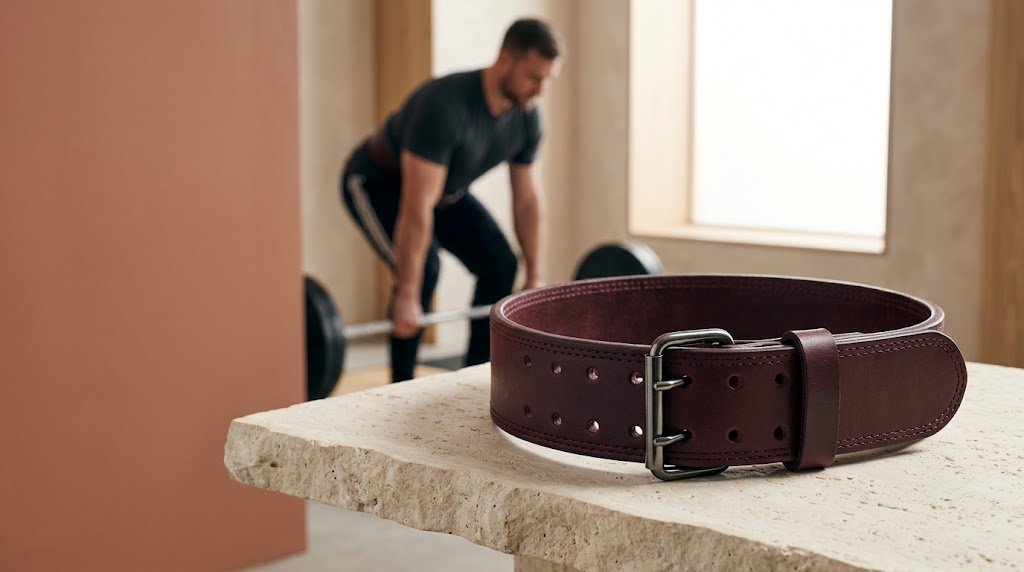
A double prong weightlifting belt is a popular choice for lifters who want a traditional belt for strength training. It uses two metal prongs and a series of adjustment holes to secure the belt around your waist during exercises such as squats and deadlifts.
Compared with a lever belt, a double-prong belt offers a familiar buckle design and adjustable fit. However, the best choice depends on your training style, comfort, and personal preference.
In this guide, you will learn how a double-prong belt works, its benefits, how to choose the right size, and what to look for when buying a leather weightlifting belt.
What Is a Double Prong Weightlifting Belt?
A double prong weightlifting belt is a supportive belt designed for strength training. It has two metal prongs that fit through matching holes to hold the belt securely around your waist.
Many models are made from leather because it provides a firm, structured feel during heavy lifting. These belts are commonly used for squats, deadlifts, and other exercises that require strong core bracing.
A double-prong belt usually includes:
- A leather or other durable belt body.
- Two metal prongs.
- A buckle attached to one end.
- Multiple adjustment holes.
- Reinforced stitching or other construction features, depending on the design.
The double-prong fastening system is the main feature that distinguishes this style from a single-prong belt.
How Does a Double Prong Belt Work?
A weightlifting belt provides a firm surface against which you can brace your abdominal muscles.
Before a demanding lift, you take a breath, tighten your core, and create pressure around your torso. The belt can help you brace against that surface while maintaining control through the movement.
To fasten a double-prong belt, wrap it around your waist, line up the buckle with the appropriate holes, and insert both prongs. Make sure the belt feels secure without being painfully tight.
The belt does not do the bracing for you. You still need to learn proper breathing, maintain appropriate technique, and choose a weight you can control.
Benefits of a Double Prong Weightlifting Belt
1. Adjustable Fit
A double-prong belt uses several adjustment holes, allowing you to change the tightness to suit your waist and preferences.
A good fit should feel secure during lifting while still allowing you to breathe and brace properly.
2. Traditional Design
Many lifters prefer the straightforward design of a traditional leather gym belt. The buckle-and-hole system is familiar and does not require a lever mechanism.
3. Suitable for Heavy Strength Training
A well-made double-prong leather belt can be suitable for exercises such as squats and deadlifts, where strong core bracing is important.
It may be useful for experienced lifters who regularly perform demanding working sets.
4. Durable Construction
A belt made with quality leather, sturdy metal hardware, and reliable stitching can last through regular training when properly maintained.
Durability depends on the materials and manufacturing quality, not simply on the number of prongs.
5. Multiple Training Uses
A double-prong belt can be used for several compound exercises. However, it is not necessary for every workout or every set. Many lifters reserve it for heavier lifts that require greater bracing.
Double Prong vs. Single Prong Weightlifting Belt
Both designs use a traditional buckle, but they differ in how the belt is fastened.
| Feature | Double-prong belt | Single-prong belt |
|---|---|---|
| Fastening | Two prongs | One prong |
| Adjustment | Uses buckle holes | Uses buckle holes |
| Design | Traditional, two-prong closure | Traditional, one-prong closure |
| Fit | Depends on sizing and adjustment | Depends on sizing and adjustment |
| Best choice | Personal comfort and preference | Personal comfort and preference |
A double-prong design has two points of fastening, but that does not automatically make it stronger or more supportive than a single-prong belt. Overall construction, fit, and hardware quality matter.
If you find the two prongs difficult to line up or release, a single-prong belt may be more convenient.
Double Prong vs. Lever Weightlifting Belt
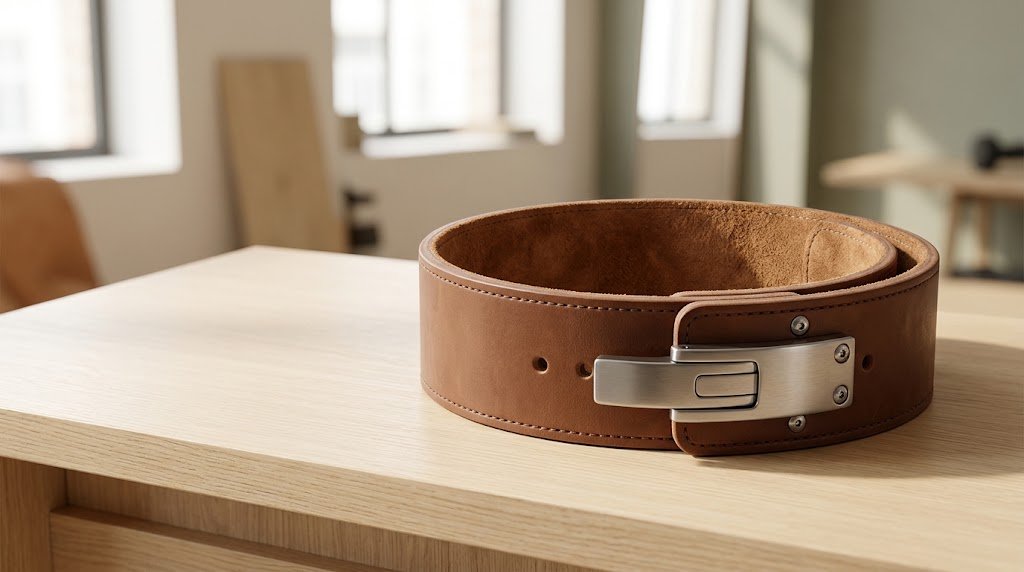
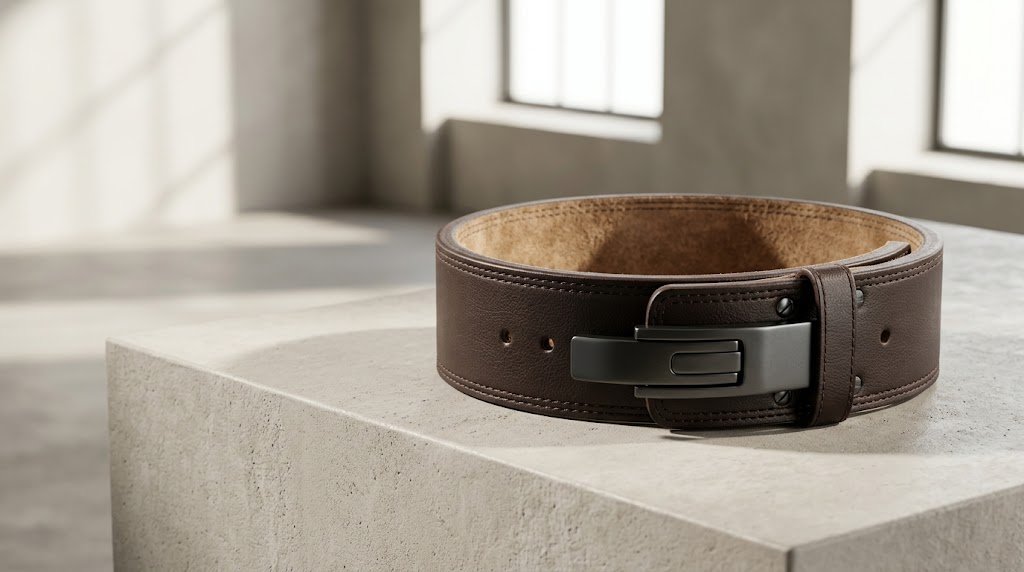
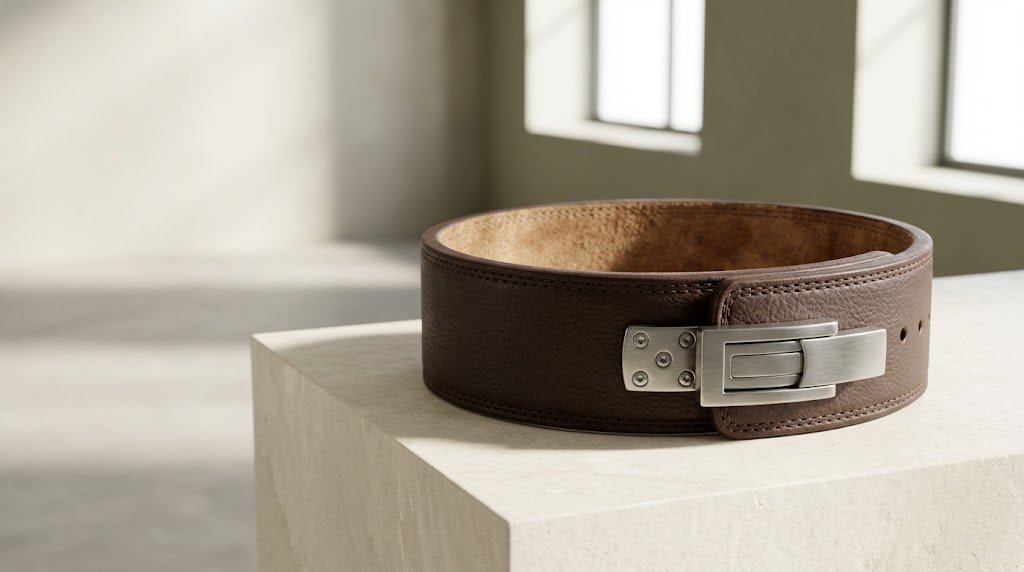
A lever belt uses a metal lever mechanism instead of traditional prongs. Once adjusted, the lever can make opening and closing the belt quick between sets.
A double-prong belt allows you to adjust tightness through the buckle holes. Depending on the design, fastening or releasing it may take a little more time.
Choose a double-prong belt if you prefer a traditional buckle and straightforward adjustment.
Choose a lever belt if you prefer a quick fastening mechanism and usually maintain a consistent belt setting.
Neither option is best for every lifter. Comfort, fit, and reliable construction should guide your decision.
Is a Leather Double Prong Belt a Good Choice?
A leather double-prong weightlifting belt can be a good choice for people who want a firm belt for regular strength training.
When comparing leather belts, consider the following factors.
Leather Quality
Look at the stated leather type and grade. Full-grain and top-grain leather are different categories, and the quality of the finished belt also depends on the hide, processing, and construction.
Do not assume that every product described as a leather belt has the same durability or feel.
Thickness
Many strength-training belts are available in thicknesses such as 10 mm and 13 mm.
A thicker belt may feel firmer, while a thinner option may feel easier to wear for some people. The right choice depends on your body shape, training, and comfort.
Stitching and Edges
Check whether the stitching looks consistent and the edges are finished neatly. Poor finishing may affect comfort and the belt’s long-term durability.
Buckle Hardware
The buckle and prongs should be securely attached and properly aligned. The holes should allow the prongs to pass through without excessive difficulty.
Belt Width
The belt should fit your torso without digging uncomfortably into your ribs or hips. Review the manufacturer’s measurements before ordering.
How to Choose the Right Size
Choosing the correct size is important for comfort and effective bracing.
- Measure your waist: Follow the manufacturer’s sizing instructions rather than relying only on your pants size.
- Check the size chart: Sizing can vary between manufacturers.
- Review the adjustment range: Make sure the holes allow you to achieve a secure fit.
- Consider belt width: Choose a width that feels comfortable during your main lifts.
- Test your brace: You should be able to take a breath, tighten your core, and move without excessive discomfort.
A belt that is too loose may not provide the firm contact you want. One that is too tight can restrict comfortable breathing and movement.
How to Wear a Double Prong Weightlifting Belt
Use these basic steps to wear your belt correctly:
- Position the belt around your torso where it feels comfortable for the exercise.
- Wrap it securely around your waist.
- Align the buckle and insert both prongs into the selected holes.
- Take a breath and brace your abdominal muscles against the belt.
- Perform the lift with controlled technique and an appropriate load.
- Release the belt between sets if you prefer or need to relax your torso.
Practicing without heavy weights can help you become familiar with the fastening system and bracing technique.
A belt is a training aid, not a replacement for proper technique. If a lift causes pain, do not tighten the belt and push through it.
How to Maintain a Leather Weightlifting Belt
Proper care helps keep a leather belt in good condition.
- Wipe away sweat and surface dirt after training.
- Allow the belt to air-dry before storing it.
- Avoid leaving it in a damp gym bag for long periods.
- Keep the buckle and prongs clean.
- Follow the manufacturer’s instructions for leather care.
- Inspect the stitching, buckle, and holes regularly for signs of wear.
Avoid using harsh cleaners or excessive moisture unless the manufacturer specifically recommends them.
Frequently Asked Questions
Is a double-prong weightlifting belt better than a lever belt?
Not necessarily. A double-prong belt offers traditional buckle adjustment, while a lever belt can be faster to open and close once adjusted. Choose based on comfort and preference.
Is a double-prong belt good for deadlifts?
It can be suitable for deadlifts if it fits properly and allows you to brace comfortably. Your technique and training load remain important.
Should beginners use a double-prong belt?
Beginners should first learn good lifting technique and core bracing. A belt may become useful as training demands increase, but it is not essential for every beginner.
What thickness should I choose?
A 10 mm belt can be a practical option for many lifters who want a firm leather belt. Thicker belts may suit some preferences, but comfort and fit matter more than thickness alone.
Does a double-prong belt provide more support because it has two prongs?
Not automatically. The number of prongs does not determine the overall support or durability. The belt’s fit, materials, construction, and hardware quality also matter.
Final Thoughts
A double prong weightlifting belt is a traditional option for lifters who want an adjustable buckle and a firm fit for strength training.
When choosing one, focus on leather quality, thickness, width, stitching, buckle construction, and correct sizing. Compare double-prong, single-prong, and lever designs to find the option that best matches your training routine.
A well-made belt can be a useful training tool, but proper bracing, sound technique, and sensible training progression remain essential.