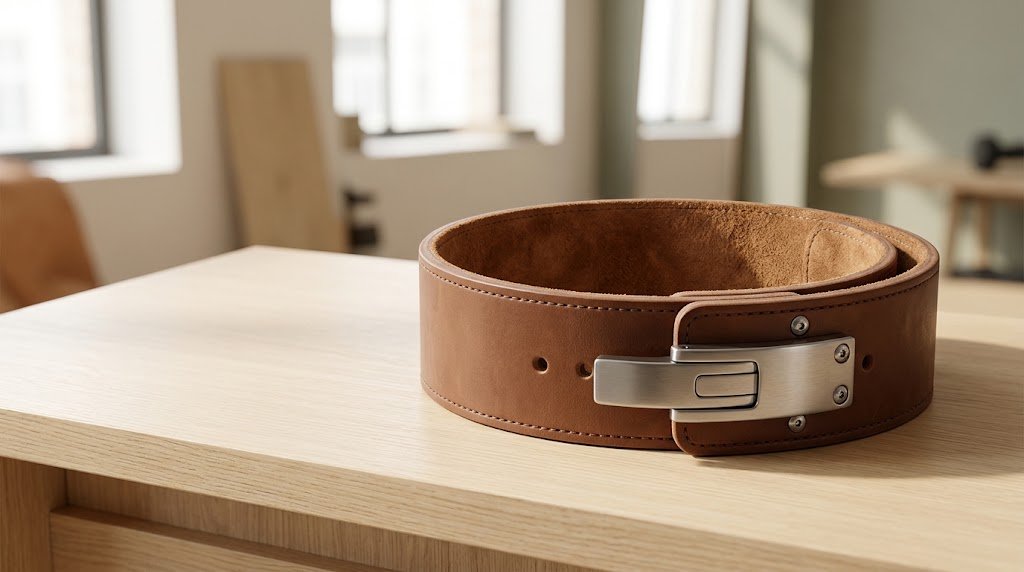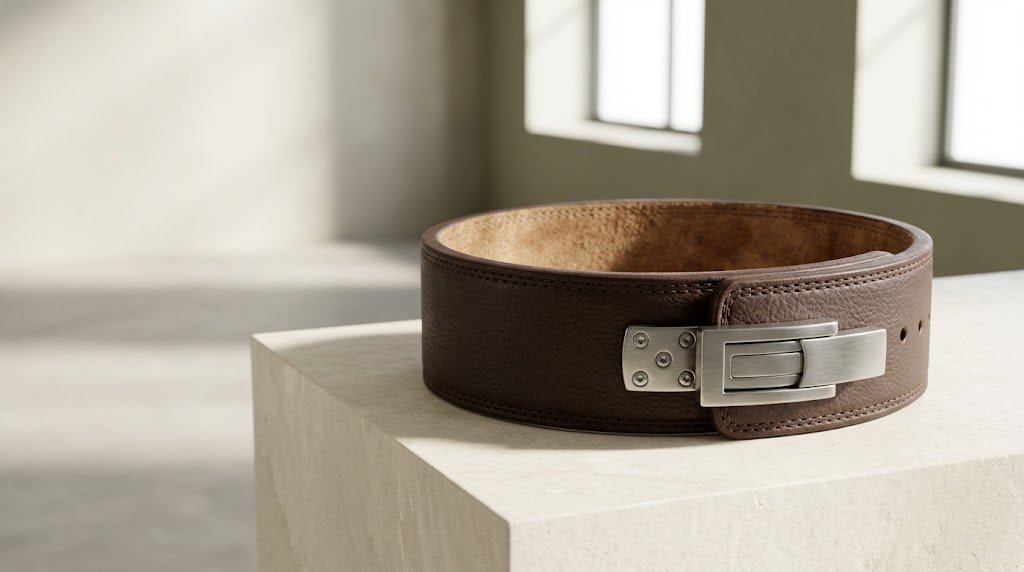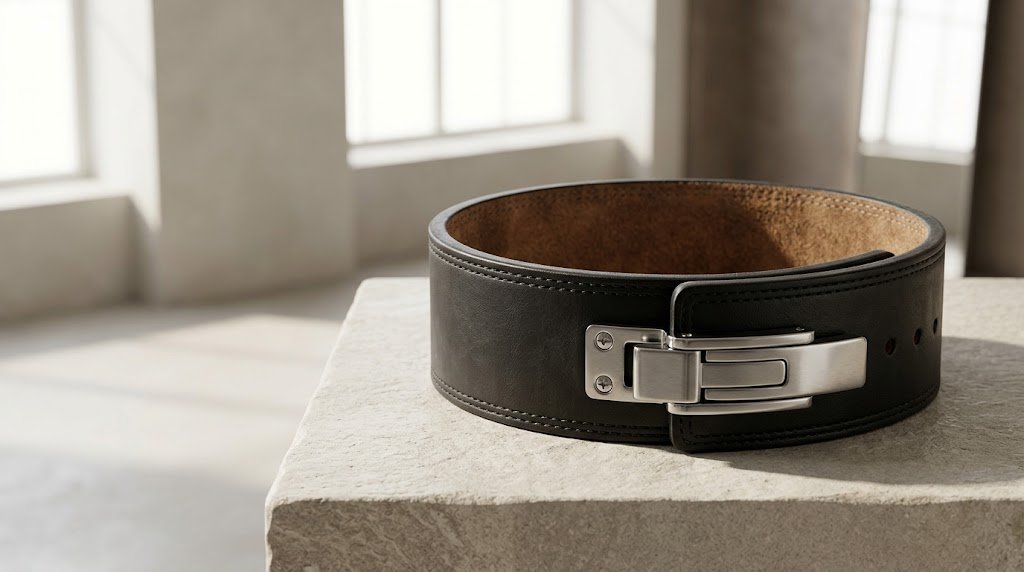
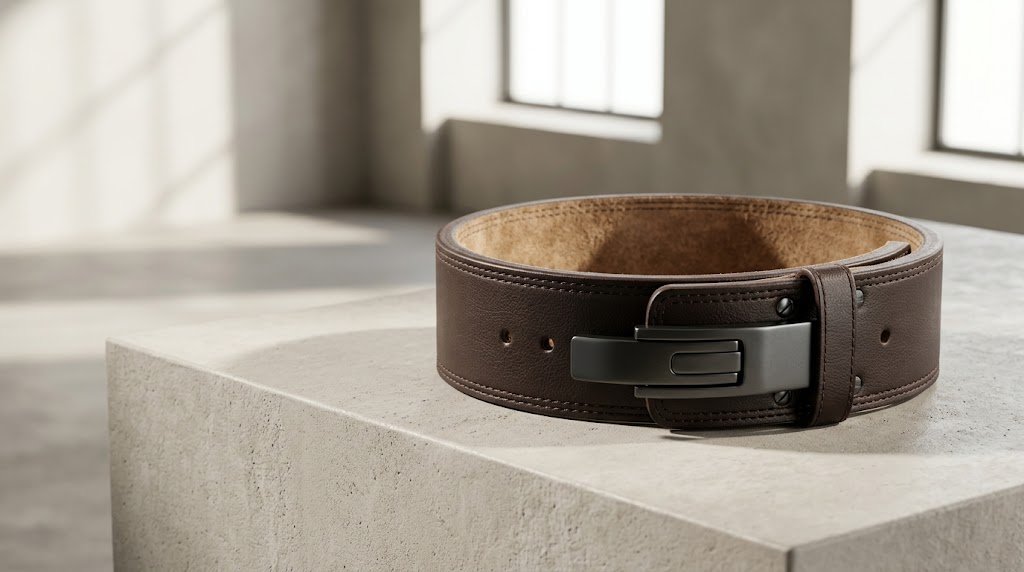
Choosing the right weightlifting belt starts with understanding its materials and design. The type of leather, its grade, the tanning method, and the buckle all affect the finished product. If you want a leather belt with a lever closure, these details can help you compare your options.
A bull hide top grain chrome tanned lever belt combines bull hide leather, a top grain leather surface, chrome tanning, and a lever buckle. It is designed for strength-training users who want a leather belt with a secure closure and a practical design.
In this guide, you will learn what these features mean, what to look for before buying, and how to care for your belt.
What Is a Bull Hide Top Grain Chrome Tanned Lever Belt?
This is a leather weightlifting belt made from top grain bull hide that has been chrome tanned. It uses a lever mechanism to fasten the belt around the waist.
Each part of the name describes a specific feature. Bull hide identifies the leather source. Top grain describes the leather grade and surface. Chrome tanned refers to the tanning process, while lever describes the fastening system.
These features help define the product, but they do not guarantee its quality on their own. Leather selection, thickness, construction, stitching, and hardware all affect how the finished belt performs.
Understanding these details can help you make a more informed choice instead of judging a belt by its appearance alone.
1. Why Choose Bull Hide Leather?
Bull hide leather is used in different leather products, and its characteristics can vary depending on the animal, hide selection, and processing method.
A well-made bull hide lever belt may appeal to lifters who want a firm leather belt for regular strength training. However, the final feel and performance depend on how the leather is processed and how the belt is constructed.
Bull hide should not automatically be considered stronger than every other type of leather. The quality of the hide, thickness, tanning process, and manufacturing standards all matter.
When comparing belts, look for clear material specifications. Ask about leather thickness, buckle construction, stitching, and edge finishing. These details offer a better picture of the product than the leather source alone.
2. What Does Top Grain Leather Mean?
Top grain leather comes from the outer portion of the hide. Its surface may be sanded or otherwise finished to remove some natural imperfections. The exact treatment depends on the manufacturer.
A top grain leather belt can have a more uniform appearance than leather that retains all its natural grain features. Finishes may also change its color, texture, and feel.
Top grain leather is used in many leather goods, including belts and bags. Its quality still depends on the original hide, processing, thickness, and finishing methods.
Top grain and full grain are not identical. Full grain leather retains the natural grain surface without sanding away the grain to remove imperfections. Top grain leather may receive more surface treatment.
Neither label alone tells you everything about a belt’s quality. Check the finished product, construction, and specifications before buying.
3. What Is Chrome Tanned Leather?
Chrome tanning is a widely used method of turning raw hides into leather. It uses chromium-based tanning agents to help create stable leather suitable for different products.
The finished leather can vary in softness, flexibility, color, and firmness depending on the tanning process and later finishing steps.
A chrome tanned leather belt is not automatically better or worse than a vegetable-tanned belt. The right option depends on the intended product, the properties required, and the quality of production.
For weightlifting belts, it is useful to know how thick and firm the leather is, how it holds its shape, and whether it is designed for strength-training use. Ask the supplier for accurate specifications rather than assuming that the tanning method alone determines performance.
Responsible manufacturing and appropriate chemical management are also important considerations when sourcing leather products.
4. How Does a Lever Closure Work?
A lever closure uses a metal mechanism attached to the belt. You wrap the belt around your waist, secure the lever, and release it when you need to remove the belt.
A leather lever belt can be convenient for lifters who want to fasten and release their belt quickly between sets. Once you have adjusted it correctly, the mechanism can help you achieve a repeatable fit.
However, not every lever system adjusts in the same way. Some designs allow you to reposition the mechanism, while others use different adjustment methods. Check the design before purchasing, especially if your waist measurement may change.
The lever should close securely and operate smoothly. Inspect the attachment points, fasteners, and metal finish. Avoid using a belt if its mechanism is loose, damaged, or unable to lock properly.
A lever closure is a matter of preference, not a guarantee that the belt is better than a prong design.
5. Who Can Benefit From This Belt?
A bull hide weightlifting belt with a lever closure may suit lifters who perform heavy compound movements and prefer a firm belt around their midsection.
Exercises where some lifters choose to wear a belt include:
- Barbell squats
- Deadlifts
- Certain overhead lifts
- Other heavy strength-training movements that require deliberate bracing
A belt is not necessary for every exercise. Beginners can build strength and learn proper lifting technique without using one from the start.
A belt may help a lifter brace against the belt during a lift, but it does not replace good technique, sensible load selection, or a well-planned training program.
If you are new to belt training, ask a qualified strength coach to help you learn how to position the belt and brace properly. The belt should feel secure without stopping you from breathing and moving as needed.
6. What Should You Check Before Buying?
Before buying a belt, compare the features that affect fit, comfort, and construction.
Leather grade: Confirm that the product uses top grain bull hide if that is what you want. Ask the supplier to explain the material clearly.
Thickness and width: These affect how the belt feels around your torso. The right dimensions depend on your body, training style, and personal preference.
Lever mechanism: Check that it closes securely, releases smoothly, and offers suitable adjustment options.
Stitching and edges: Look for consistent stitching, clean edges, and a neat finish.
Sizing: Measure your waist using the manufacturer’s sizing instructions. Trouser size is not always the same as belt size.
If you are comparing a powerlifting lever belt, review the complete product rather than focusing on one material feature. Good construction, suitable sizing, and secure hardware all matter.
7. How to Care for Your Leather Belt
Simple care can help keep a leather belt in good condition.
After training, wipe away sweat and surface moisture with a clean, soft cloth. Let the belt air-dry before storing it. Avoid leaving it in a hot car or exposing it to prolonged direct sunlight.
Do not soak the leather or use harsh cleaning products. If the manufacturer recommends a leather conditioner, follow its instructions and test it on a small, less visible area first.
Check the lever, fasteners, stitching, and adjustment points regularly. If the buckle becomes damaged or cannot close securely, stop using the belt until it has been properly repaired or replaced.
For anyone choosing a chrome tanned belt, following the manufacturer’s care instructions is a sensible way to protect the leather’s finish and maintain its appearance.
8. Is This the Right Belt for You?
A bull hide top grain chrome tanned lever belt may suit you if you prefer this type of leather and want the convenience of a lever closure. However, the best choice depends on your training, fit preferences, and budget.
Some lifters prefer full grain leather because it retains its natural grain surface. Others prefer the finish or feel of top grain leather. Both can be used in leather products, but the actual quality depends on the material and construction.
When choosing a leather lifting belt, compare the leather specifications, thickness, sizing, stitching, and hardware. A clear product description and reliable supplier can help you make a better decision.
Frequently Asked Questions
Is bull hide leather suitable for a weightlifting belt?
It can be suitable when the leather is properly selected and the belt is designed and constructed for its intended use. Check the specifications and finished product quality.
What is the difference between top grain and full grain leather?
Full grain leather retains its natural grain surface, while top grain leather may be sanded or finished to remove surface imperfections. The best option depends on the product and the quality of the leather.
Is chrome tanned leather good for lever belts?
It can be used for lever belts. The finished leather’s thickness, firmness, quality, and suitability for the design are more important than the tanning label alone.
How tight should a lever belt be?
It should fit securely while allowing you to breathe and brace properly. Follow the manufacturer’s fitting guidance and seek help from a qualified coach if needed.
Final Thoughts
A bull hide top grain chrome tanned lever belt combines a specific leather source, grade, tanning method, and closure design. Understanding these features makes it easier to compare products and choose one that suits your training.
Focus on accurate material information, suitable sizing, reliable lever hardware, and careful construction. These practical details will help you select a belt with greater confidence.