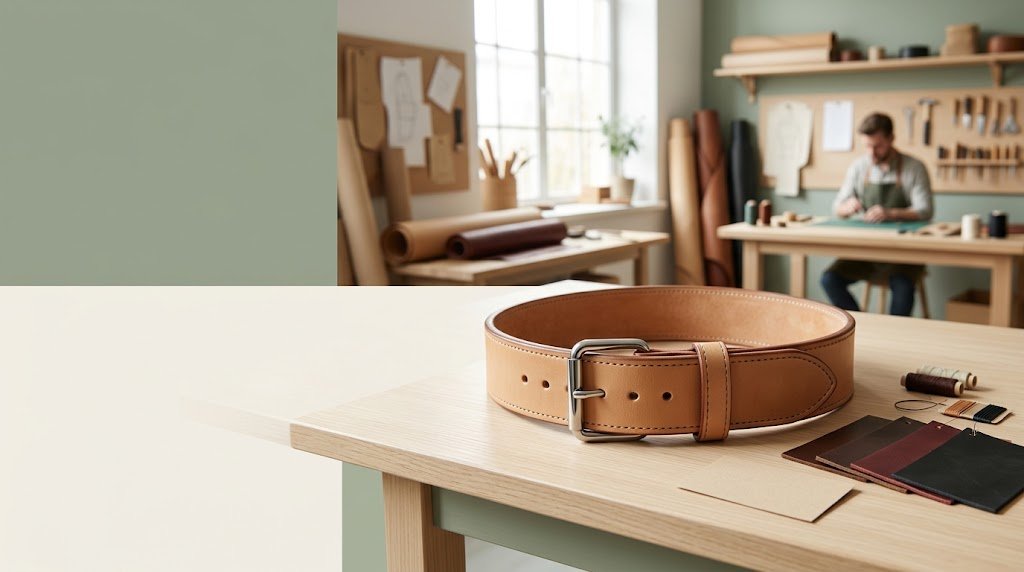
A custom leather weightlifting belt lets you choose a belt that matches your training needs, preferred fit, and personal design. Whether you lift weights for general fitness, powerlifting, or strength training, a customized belt can offer a more personalized option than a standard design.
Custom belts may allow you to select leather type, thickness, width, buckle style, color, stitching, and personalized details such as embroidery or a logo.
However, not every customization option affects performance. Some features are mainly for appearance, while others influence comfort, fit, and how the belt works during training.
In this guide, you will learn how custom leather weightlifting belts work, which options to consider, and how to choose a belt that suits your needs.
What Is a Custom Leather Weightlifting Belt?
A custom leather weightlifting belt is a belt made or configured according to specific customer requirements. Depending on the supplier, customization may involve choosing materials, dimensions, fastening systems, colors, or decorative details.
Unlike a standard belt with fixed specifications, a custom design gives you more control over the final product.
Common customization options include:
- Leather type and grade.
- Belt thickness and width.
- Lever, single-prong, or double-prong closure.
- Leather and stitching colors.
- Custom embroidery or printed details.
- Personalized logos and branding.
- Packaging designed for a particular brand.
The available options depend on the manufacturer or supplier. Before placing an order, confirm which features can actually be customized.
Why Choose a Custom Leather Weightlifting Belt?
1. Choose the Material
Leather is a popular choice for strength-training belts because it can provide a firm, structured feel.
Depending on availability, custom belts may be made from cowhide, bullhide, or buffalo hide. These materials can differ in texture, thickness, and other characteristics.
You may also encounter full-grain and top-grain leather. These terms describe different categories of leather, and the finished belt’s quality depends on more than the grade alone.
Ask the supplier about the leather type, tanning process, thickness, and construction before choosing a material.
2. Select the Right Thickness
Belt thickness affects how firm the belt feels around your waist.
Many leather weightlifting belts are available in thicknesses such as 10 mm and 13 mm. A 10 mm belt may suit lifters who want a firm belt without the extra rigidity of a thicker option.
A thicker belt is not automatically better. The right choice depends on your training, body shape, comfort, and preferred level of stiffness.
When ordering a custom belt, confirm the finished thickness rather than relying on a general product description.
3. Customize the Belt Closure
The closure affects how the belt fastens and adjusts around your waist.
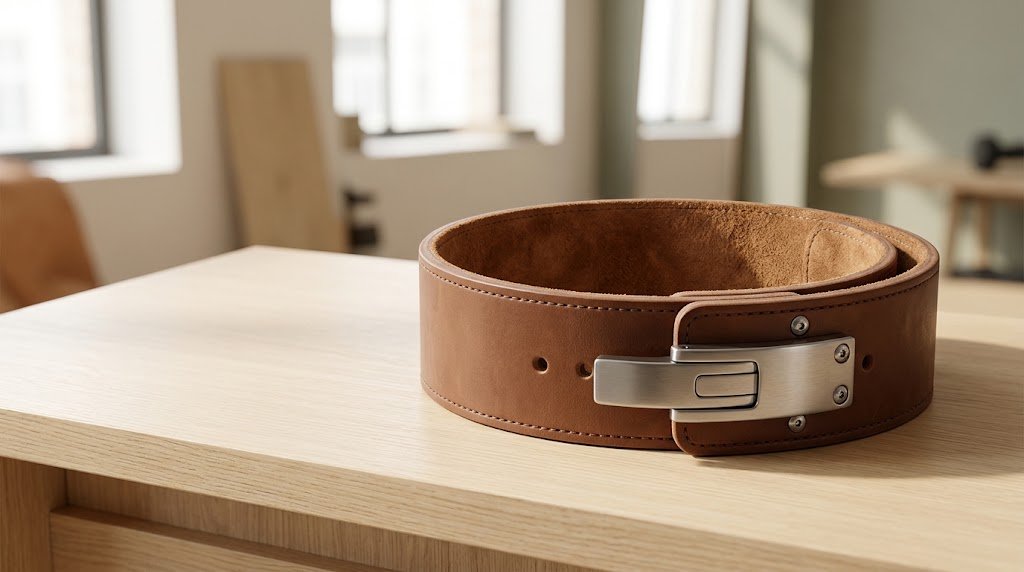
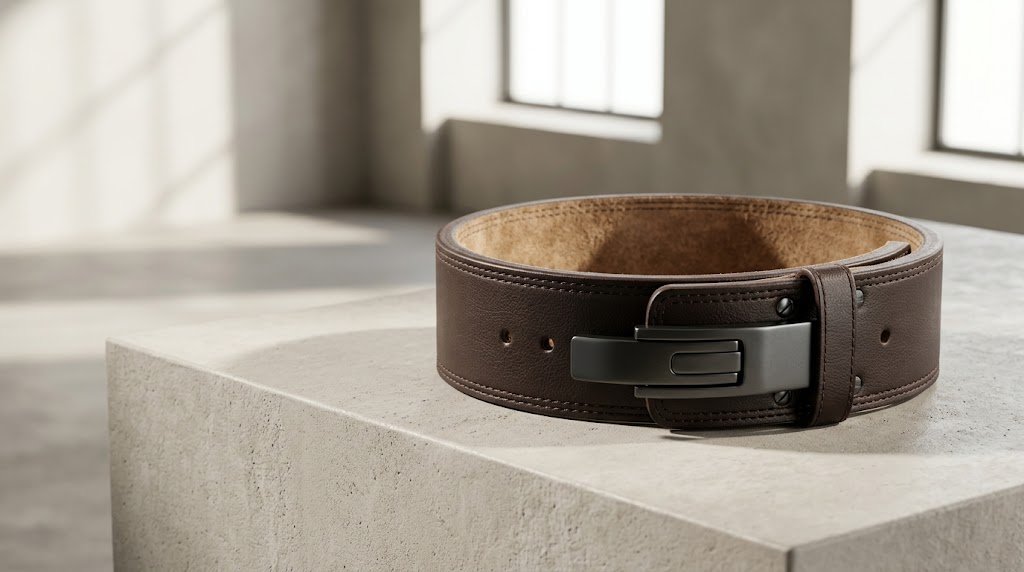
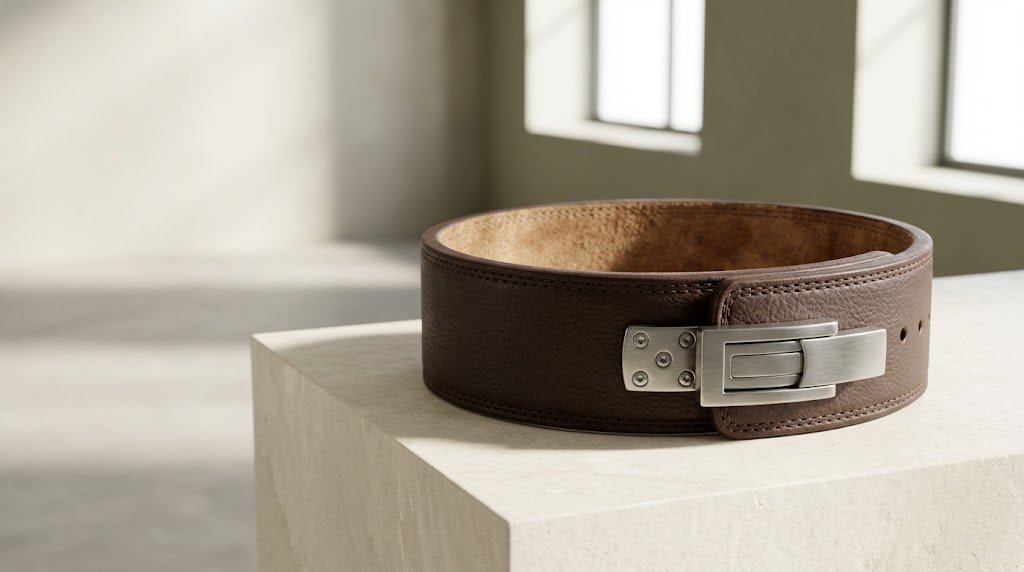
Lever closure: A lever belt can be quick to open and close once correctly adjusted. It may suit lifters who prefer a consistent fit between sets.
Double-prong closure: A double-prong belt uses two metal prongs and adjustment holes. It offers a traditional fastening system.
Single-prong closure: A single-prong belt uses one prong and adjustment holes. Some lifters prefer its straightforward design.
Choose a closure based on convenience, comfort, and how often you expect to change the belt’s tightness.
4. Add Custom Colors and Stitching
Customization can extend to the belt’s appearance. Depending on the supplier, you may be able to select leather colors, stitching colors, edge finishing, or other design details.
For example, a black leather belt with matching stitching can offer a clean, understated look. A brown belt with contrasting stitching may create a more distinctive appearance.
If you are ordering belts for a retail brand, choose colors and finishes that match your product range and intended customers.
5. Personalize the Belt With Embroidery
Some custom leather belts can include embroidered names, designs, or other personalized details, depending on the construction and supplier’s capabilities.
Embroidery can make a belt more distinctive for personal use, gifts, clubs, or branded product collections.
Before confirming the design, ask for a digital proof or sample when available. Check the spelling, size, placement, and colors to reduce the risk of mistakes.
Keep in mind that embroidery and decorative details should not interfere with the belt’s intended fit or function.
How to Choose the Right Custom Belt for Your Training
The best custom belt is one that suits the exercises you perform and feels comfortable during lifting.
For Squats and Deadlifts
If you regularly perform heavy squats and deadlifts, consider a firm leather belt with a suitable width and thickness.
A lever or prong closure may work well, depending on your preferences. Make sure the belt allows you to brace comfortably without digging painfully into your ribs or hips.
For General Strength Training
If you train with a mix of exercises, prioritize comfort and versatility. An extremely rigid belt may not be the best fit for every training style.
Think about which exercises you perform most often and whether you want to adjust the belt frequently.
For Powerlifting
Powerlifters may prefer a firm belt that offers a consistent fit during heavy compound lifts. Check the rules of your intended federation or competition before ordering, because equipment requirements can vary.
Do not assume that every customized belt will be approved for competition.
How to Get the Correct Belt Size
Correct sizing is essential for comfort and a secure fit.
Follow these steps when ordering a custom leather gym belt:
- Measure your waist: Follow the supplier’s instructions for where and how to measure.
- Check the size chart: Do not rely only on your pants size.
- Confirm the adjustment range: Make sure the belt can fit securely at your preferred tightness.
- Choose the appropriate width: Consider your torso shape and the exercises you perform.
- Review the final specifications: Confirm the size, thickness, closure, and other selected features before production.
If you are ordering for several people, do not assume that one size will suit everyone. Collect measurements and confirm the sizing method before placing the order.
Custom Leather Weightlifting Belts for Businesses
Custom belts can also be useful for fitness brands, gyms, retailers, distributors, and wholesalers that want products designed for their own customers.
Businesses may request OEM or private-label services, allowing products to be made according to agreed specifications and sold under their own brand, subject to the supplier’s capabilities and agreements.
Common business requirements include:
- Custom belt designs and specifications.
- Brand logos and embroidery.
- Custom stitching and color combinations.
- Bulk and wholesale orders.
- Individual or branded packaging.
- Sample development before production.
If you are buying in bulk, ask about minimum order quantities, sample costs, production timelines, payment terms, quality checks, and shipping arrangements.
Request a sample when possible so you can review the actual material, construction, and finish before committing to a larger order.
What Affects the Price of a Custom Leather Belt?
The cost of a custom leather weightlifting belt depends on the materials, specifications, customization, and order quantity.
Factors that may influence the price include:
- Leather type: Different hides and grades can have different costs.
- Thickness and dimensions: Material requirements affect production costs.
- Closure hardware: Lever and buckle systems vary in design and price.
- Custom details: Embroidery, special colors, and branding can add costs.
- Packaging: Custom boxes, labels, and inserts may increase the total.
- Order quantity: Bulk pricing may differ from single-unit pricing.
- Shipping and duties: These can affect the final delivered cost.
When comparing quotations, check that each supplier is pricing the same specifications. A lower quotation may cover a different leather type, thickness, or set of customization options.
How to Care for a Custom Leather Weightlifting Belt
Proper care can help keep your belt in good condition.
- Wipe away sweat and surface dirt after training.
- Allow the belt to air-dry before storing it.
- Avoid leaving it in a damp gym bag.
- Follow the manufacturer’s leather-care instructions.
- Check the stitching, holes, and buckle or lever regularly.
- Store it in a dry place away from excessive heat and moisture.
Avoid harsh cleaning products unless the manufacturer specifically recommends them. If the belt has embroidery or special finishes, follow any additional care instructions supplied with the product.
Common Mistakes to Avoid When Ordering a Custom Belt
Before placing your order, avoid these common mistakes:
- Choosing a design without checking the leather specifications.
- Selecting thickness based only on what other lifters use.
- Providing measurements without following the supplier’s sizing instructions.
- Approving embroidery or logos without checking the final proof.
- Assuming every custom belt meets competition rules.
- Placing a large wholesale order without reviewing a sample when practical.
- Comparing prices without confirming that the specifications match.
Taking time to confirm the details can help you receive a belt that meets your expectations.
Frequently Asked Questions
Are custom leather weightlifting belts worth it?
They can be worth it if you want specific materials, sizing, closure options, colors, or personalized details. The value depends on the quality and whether the customization meets your needs.
Can I put my logo on a leather weightlifting belt?
Many suppliers offer logo customization, embroidery, or other branding options. Ask about the available methods, artwork requirements, placement, and minimum order quantity.
What is the best leather for a custom weightlifting belt?
There is no single best option for everyone. Compare the leather type, grade, thickness, construction, and comfort rather than choosing based on the material name alone.
Can I order custom belts in bulk?
Many suppliers offer bulk or wholesale orders, although minimum quantities and customization options vary. Confirm the specifications, pricing, sample process, and production timeline before ordering.
How long does it take to make a custom belt?
Production time depends on the supplier, order quantity, materials, customization, and current workload. Ask for an estimated timeline that includes sample approval and shipping.
Final Thoughts
A custom leather weightlifting belt gives you more control over the material, fit, closure, colors, and personalized details. Whether you are buying one for yourself or sourcing products for a fitness business, focus on the specifications that matter most.
Check the leather quality, thickness, stitching, hardware, sizing, and customization options before placing an order. For businesses, confirm samples, minimum quantities, branding requirements, and production terms.
The best custom belt is not simply the one with the most features. It is the one that matches your training needs or business requirements and is made to the agreed specifications.